

 Contact us
Mental Health
Advice for parents on pupils mental well-being
Here at St Bede’s Catholic school, our vision is to provide our families and young people with the right level of support at the right time to meet the needs of our whole school community.
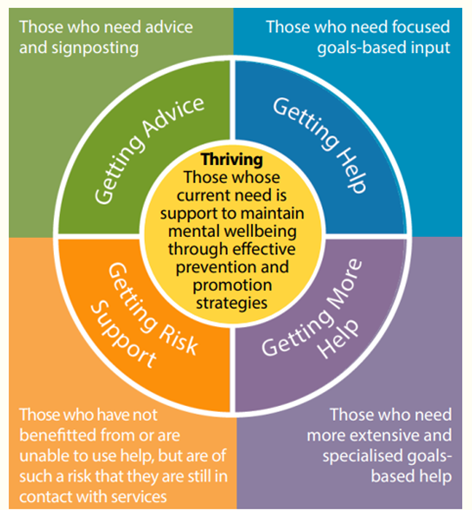
At St Bede’s, the mental health and wellbeing of every student is at the heart of our mission as a Catholic community. Our approach is rooted in the Thrive Model, which enables us to understand the social and emotional development of young people and to respond with compassion, consistency, and precision. Thrive supports schools in creating safe, nurturing environments where children feel attuned to, regulated, and ready to learn. This framework allows us to identify individual needs, build positive relationships, and ensure that all students can flourish academically, socially, and spiritually.
This commitment aligns closely with our core values—Together as a Family and Being the Best Version of Yourself. We believe that emotional wellbeing grows when every young person feels a sense of belonging, acceptance, and unconditional worth. By working together as a family, we create a supportive culture where students can learn to understand their feelings, express themselves safely, and develop resilience. In doing so, they are empowered to become the very best version of who God created them to be.
“Encourage one another and build each other up.” —1 Thessalonians 5:11
Links for MHWB parental resource Mental Health – St Bede’s Catholic School and Sixth Form College, Lanchester
No young person should be left to deal with poor mental health alone. Around 1 in 5 young people have experienced a mental health problem. For some young people, these problems will pass over time, but others may need a bit of extra support to help them get back on track. When this happens, it can be difficult to make and keep friends, manage at school and feel good about themselves and become totally overwhelmed by their emotions and feelings. It can also be bewildering for their families.
Our wellbeing resources aim to empower our young people and their families to make informed choices about their mental health and wellbeing.
We would always recommend that you seek the support and advice from your GP.
| Thriving |
| Most children and young people thrive and cope with the ‘normal’ difficulties and challenges of life and of growing up. They usually cope with challenges using their own resilience, the support of family and friends and support from their school PSHE lessons – to raise awareness and promote emotional health and wellbeing. Assemblies PSHE Bitesize Core values Anti-Bullying Ambassadors Trusted Adult – Speak Out Saty Safe We Are Listening email available to all students and promoted around school.SEND support plans and reasonable adjustments Behaviour curriculumReview of attendance and behaviour data to feed into early identification of MHWB needs.Peer Buddies- KS2 Transition and journey throughKey speakers and visitors into school – Never throw in the towel projectSocial media posts promoting wellbeing and advice.Posters in school promoting mental health and wellbeing with universal services, |
| Getting Advice |
| Those that need signposting and advice Kooth Reset Room intervention Year Team wellbeing check-ins DDSL check ins Family Nurse team Ms Stemp – medical lead |
| Getting Help |
| Those that need focused goals-based input Emotional Resilience Nurse referral School counselling – Road Centre Centre for Women Girls Resilience ProgrammeSEND based interventions – eg Anger Gremlins Multi-agency support and meetings in school |
| Getting More Help |
| Those that need more extensive and specialist goals-based help NHS Mental Health Support Team (Piece of Mind)EWEL Team referral and interventionCAMHS referralReferral to PCN Child and Adolescent Mental Health Practitioner (Natalie Rhodes) |
| Getting Risk Support |
| Those that have not benefited from or are unable to use help, but are at such a risk they are still in contact with services CAMHS / CAMHS crisis School safety plans First Contact / Police referral |
Kooth
Kooth is a free, safe and anonymous online wellbeing service for children and young people. Kooth offers a wide range of therapeutic tools to help children and young people and support their mental wellbeing.
Young people using the site are able to access a range of support services including one-to-one counselling sessions, discussing issues with their peers through online discussion boards, reading and contributing to self-help content and recording their feelings via journals and goal trackers. The online nature of Kooth means that young people can access help in a way that is most suitable for them, at a time that is convenient for them, 365 days of the year.
YoungMinds
If you’re struggling with your feelings, you’re not alone. Young Minds have loads of practical tips and advice from young people just like you, as well as information on getting the support you need.
If you are having a mental health crisis and need urgent help now, find out who to contact on their urgent help page.
ChildLine
Childline is here to help anyone under 19 in the UK with any issue they’re going through. You can talk about anything. Whether it’s something big or small, our trained counsellors are here to support you.
Papyrus
Papyrus provide confidential support and advice to young people struggling with thoughts of suicide, and anyone worried about a young person through our helpline, HOPELINE247.
BEAT
Beat are the UK’s eating disorder charity. Our national Helpline exists to encourage and empower people to get help quickly, because we know the sooner someone starts treatment, the greater their chance of recovery. People can contact us online or by phone 365 days a year. We listen to them, help them to understand the illness, and support them to take positive steps towards recovery. We also support family and friends, equipping them with essential skills and advice, so they can help their loved ones recover whilst also looking after their own mental health.
NSPCC
NSPCC services help children who’ve been abused, protect children at risk and find the best ways to prevent child abuse from ever happening.
CEOP
CEOP is a law enforcement agency and is here to help keep children and young people safe from sexual abuse and grooming online. We help thousands of children and young people every year who have been in a similar situation to you (CEOP are unable to respond to reports about bullying, fake accounts or account hacking – please speak to a trusted adult and/or your network provider).
CAMHS (Children Adolescents Mental Health Services)
The crisis and liaison team provide mental health support to young people (up to the age of 18) who are experiencing a crisis with their mental health. The team respond to the immediate mental health needs of young people, offering short term help, either at home or in the community, and will stay involved until there is a resolution of the immediate crisis.
Police: 999
In an emergency dial 999. This should be used if:
- You are in immediate danger.
- There is a danger to life or risk of serious injury.
- A serious crime is in progress or about to happen.
| Page Views | 1755
Updated | 19th February, 2026 |
Latest News
GCSE Results Day – 2025
Staff will be ready to welcome all our Year 11 students tomorrow, 21st August to collect exam results. Staff will also be on hand to provide advice, guidance and support for all students who wish to join our fantastic 6th Form provision. Looking forward to seeing you all.
Published: August 20, 2025

Bus Timetables and Route Map from September 2025
Parents/Carers: The school have been working with Go North East reviewing pickups/stops for students which are relevant to student’s current home post code areas for September 2025. We have identified that only small changes are required. Timetable is attached. Route map is also attached. The bus numbers are also to be renamed replacing the current […]
Published: July 30, 2025


The Bishop Wilkinson Catholic Education Trust is an exempt charity. It is a company limited by guarantee registered in England and Wales under company registration number 07890590. The registered office address is Bishop Wilkinson Catholic Education HQ, Barmston Court, Turbine Business Park, Nissan Way, Washington, SR5 3NY.


